
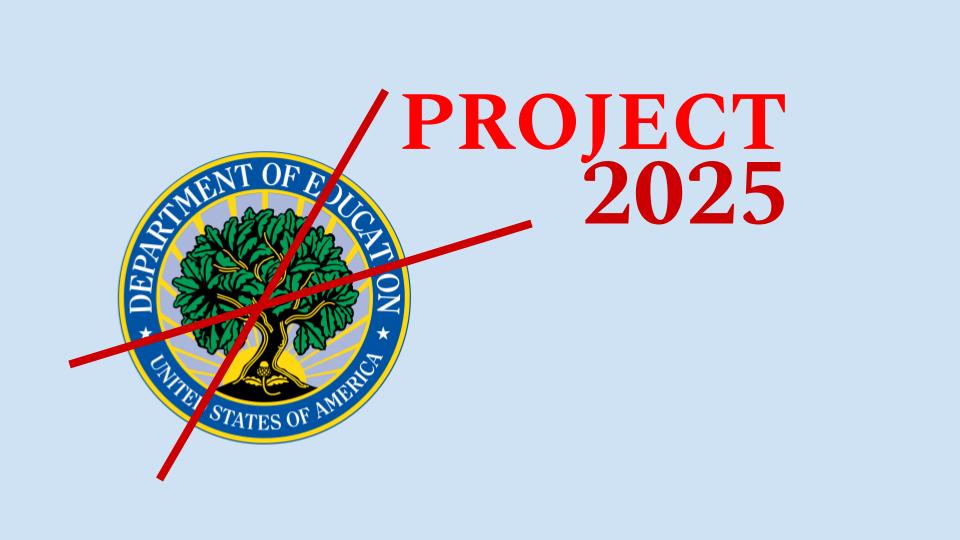
The Trump administration and the White House plan to issue an executive order to abolish the US Department of Education.
So, what exactly is the US Dept. of Education and does it do? What will the impacts be once it is eliminated?
On Oct. 17, 1979, President Jimmy Carter signed a law creating the U.S. Department of Education, with the purpose of making educational issues a “top-level priority,” holding federal education programs accountable, organizing federal education funding, and giving local communities control of their schools.
The Dept. of Education administers a budget of almost $80 billion dollars, that oversees and covers programs that address prekindergarten to postsecondary education.
Title I, as amended by the Every Student Succeeds Act (ESEA), obligates supplemental federal funding to states to ensure that all children, regardless of their income status, receive a fair, equitable, and high-quality education. Title I has played a vital role in addressing persistent disparities in funding and opportunities between students from high-poverty backgrounds and their wealthier peers. Title I supports the education of more than 26 million children, or nearly 36% of students, in the country. 21% of Black students, 33% of White students, and 37% of Latinos receive Title I funding. Title I funding supports teachers and students in schools across suburban, rural, and urban areas nationwide.
School districts rely on these funds to offer direct student support services and to recruit and retain educators. Eliminating Title I, as proposed in Project 2025 and by the current Trump Administration, could result in teacher layoffs, overcrowded classrooms, and a reduction in school-based programs and quality instruction, causing significant harm to schools, students, families, and communities.
The Individuals with Disabilities Education Act (IDEA) is a law that makes available a free appropriate public education to eligible children with disabilities throughout the nation and ensures special education and related services to those children. Defunding programs like IDEA could make it harder for parents of children with Individualized Education Programs (IEPs) or other special needs to access the resources their children are entitled to. It could also limit parents’ ability to file complaints against schools that fail to provide adequate support for students with disabilities.
Sources: Edweek, US Dept. of Education, Harvard Graduate School of Education, National Education Association (NEA), News Nation Now, NYTimes
*This report was written by Ruthie Alcazar, SF NAACP Youth Council Secretary. The Youth Council executive board voted unanimously in agreement.




 San Francisco NAACP Youth Council
Leave a comment